Wadding is an essential part of wood firing. During the firing process, wood ash is created which floats and flows throughout the kiln. This ash lands on the pottery and melts creating an glaze. If pots are placed directly onto a shelf, the ash would potentially adhere the pot to the shelf. To avoid this, wadding is used. Wadding is a highly refractory material, which prevents it from melting and sticking to your work or the shelf. After the firing, it often just falls off or can be easily crumbled or popped off the work.
In its wet form, wadding is a malleable clay-like material, which is most commonly rolled into small balls or coils. Wadding is then glued to the base of the artwork prior to loading. It acts as a buffer between the artwork and the shelves.
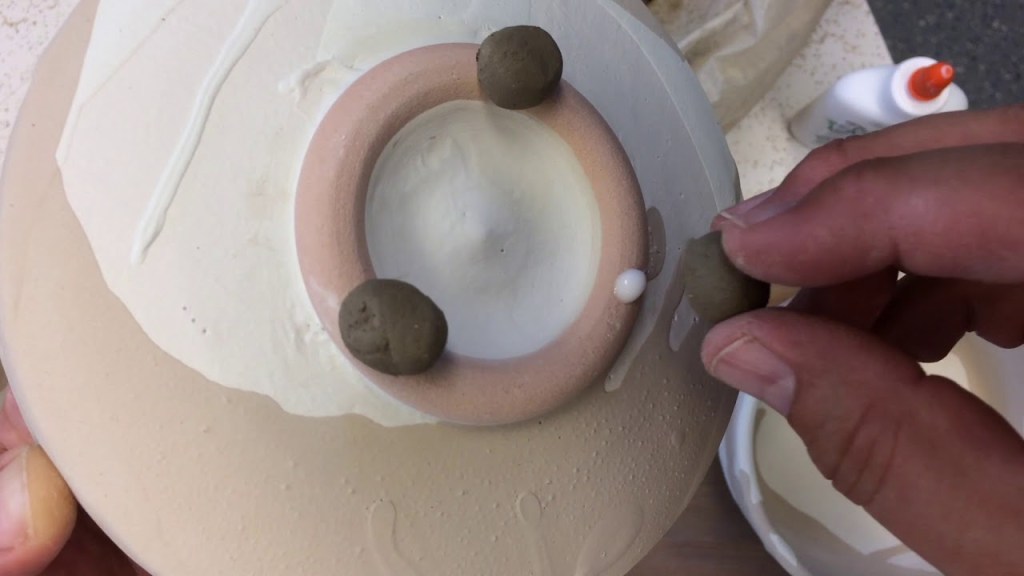
Wadding can be scaled up or down in size depending on the size of the artwork. Wadding can also be utilized as an aesthetic choice when shape, size and placement is taken into account. For example, unglazed or partially-glazed works can be stacked with wadding in between to allowing flashing to occur creating a unique finish on the works. A piece could also be fired on it’s side or upside down to take advantage of the wadding’s masking and flashing effects.
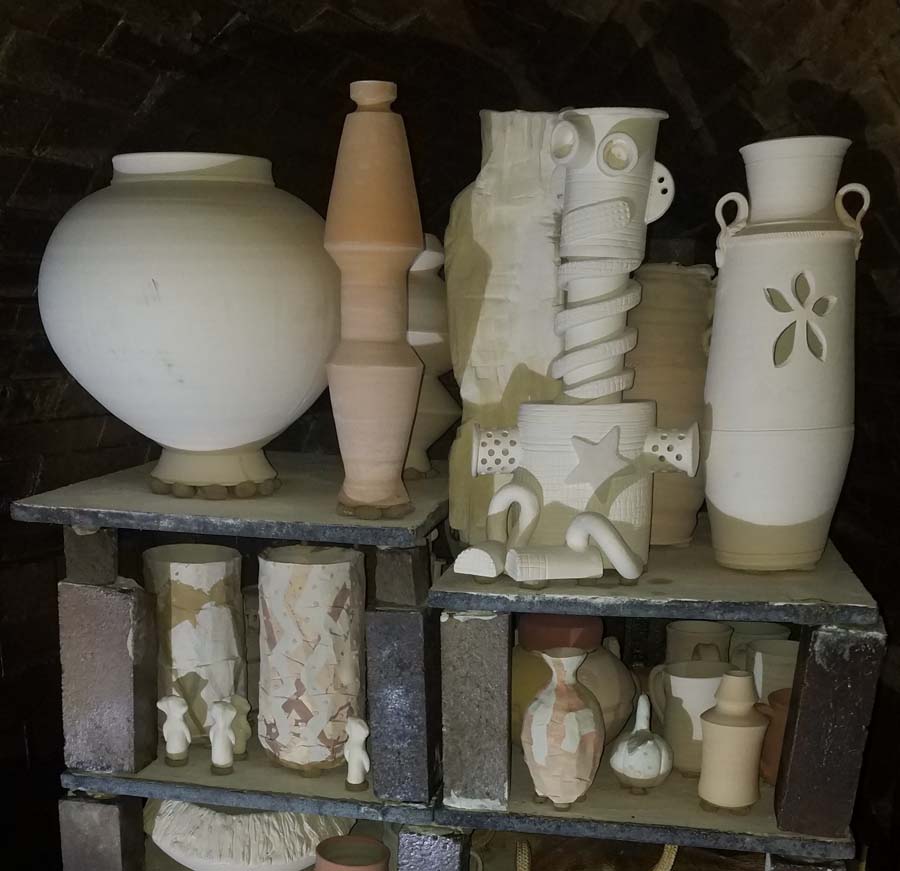
 Fire Song Anagama Kiln