A Kiln for the Ages
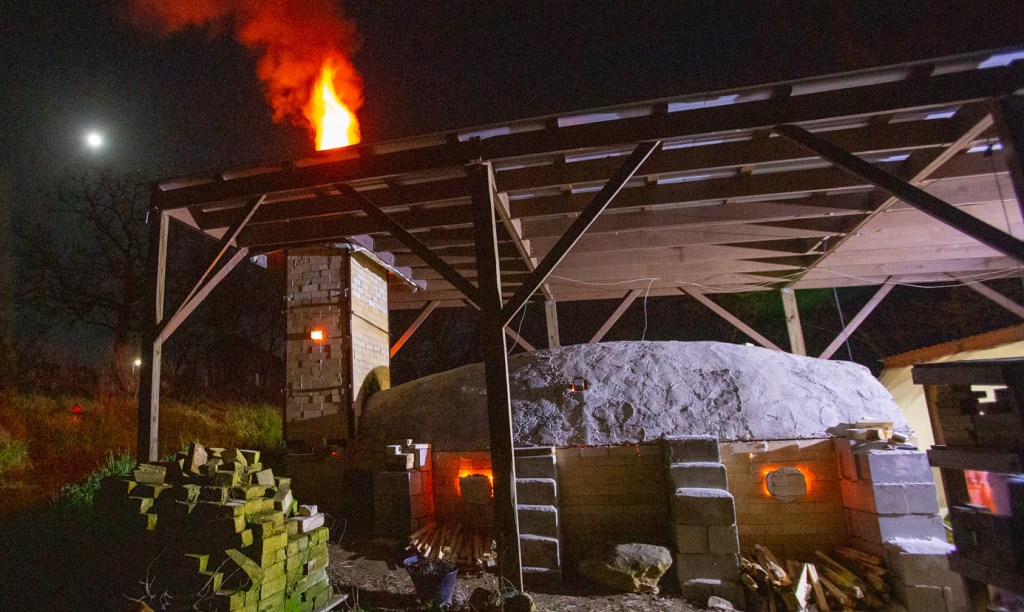
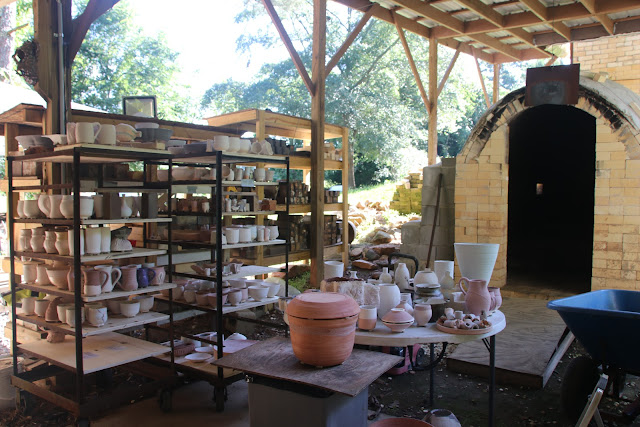
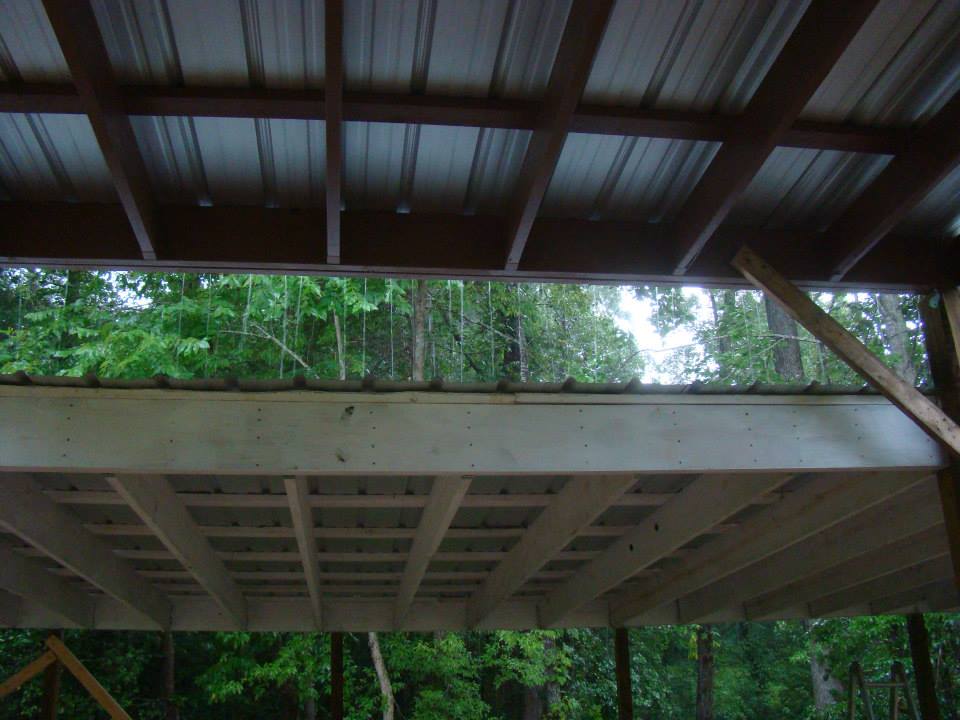
Construction of FireSong Anagama Kiln began in 2014. The entire kiln site was designed by Rob Gentry and Mike Vatalaro with longevity in mind, incorporating many subtle, but beneficial features to make firing the kiln more enjoyable and less taxing physically. This starts with the kiln pavilion. The 20′ x 60′ cement pad, provides a solid surface for tables, carts and shelves. Split wood is stored on carts, equipped with heavy duty casters, which allows them to be wheeled, with relative ease, from the wood splitting area to the staging/storage area and ultimately to the kiln for stoking. Tables are also on casters, so they can be moved around, as needed, for glazing, loading and unloading. Shelves line the edges of the pavilion, providing plenty of storage for glazes, bricks, tools, and pottery which is being readied for the firing.
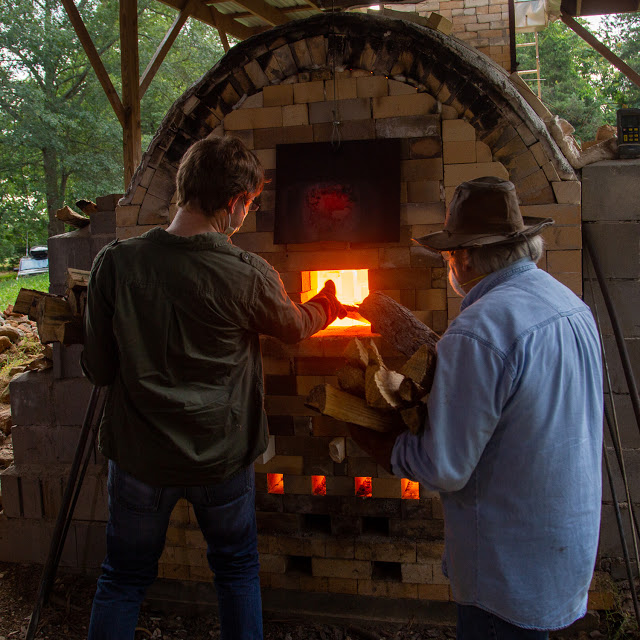
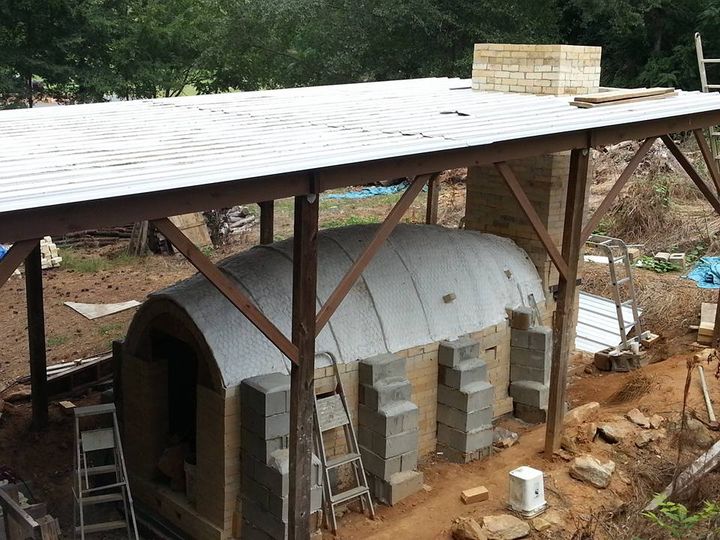
The kiln itself is also designed for ease of use. With an interior height of nearly nearly 6′ for most of the length of the kiln, you are able to walk right into the kiln for loading and unloading. Kiln stoke doors is at a comfortable waist to mid-chest height.
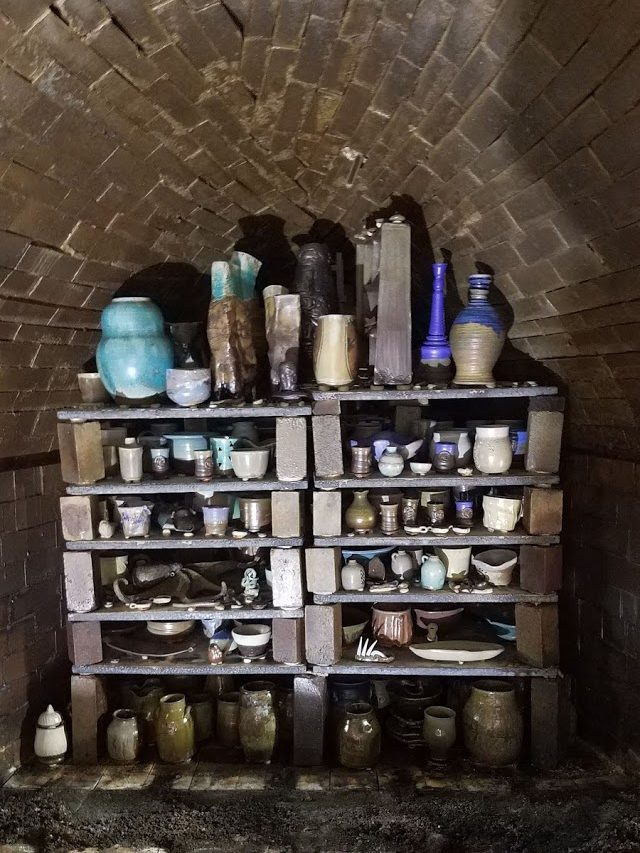
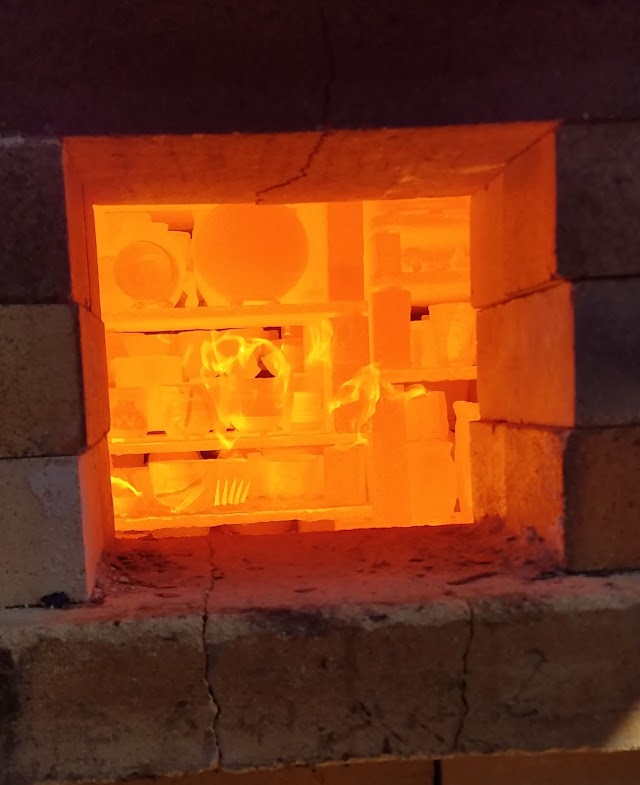
With such a large interior, you might think it would be difficult to reach top temperatures, but with the tapered curve to the roof as well as the stepped rise from front to back, heat travels exceptionally well through the space.
FireSong easily fits over 500 pieces of pottery in each firing (largest load to date is 639 pieces). With shelf heights from 4.5″ – 13″ and a top shelf regularly seeing pieces from 20″-36″ in height, there is plenty of space to share.
Naming the Kiln
As the kiln is approaching yellow heat (about 20 hours into the firing), a deep coal bed is maintained within the fire box. As the oxygen from the opened stoke door hits the unburned gases around the coal bed, the kiln, these gases ignite with a roar. The flame of gases travels throughout the kiln, depositing wood ash on all of the pots and finally exploding out of the top of the chimney with 8-foot flames. This process happens about every 10 minutes for the last 12 hours of the firing. That sound – the audible roar of the flames – likened to the awakening of a dragon, means that the real magic of the kiln has started in earnest. To the potters who are stoking, it is a beautiful music indeed, and thus, the origin of the name of the kiln: “Fire Song”.
Building the Kiln
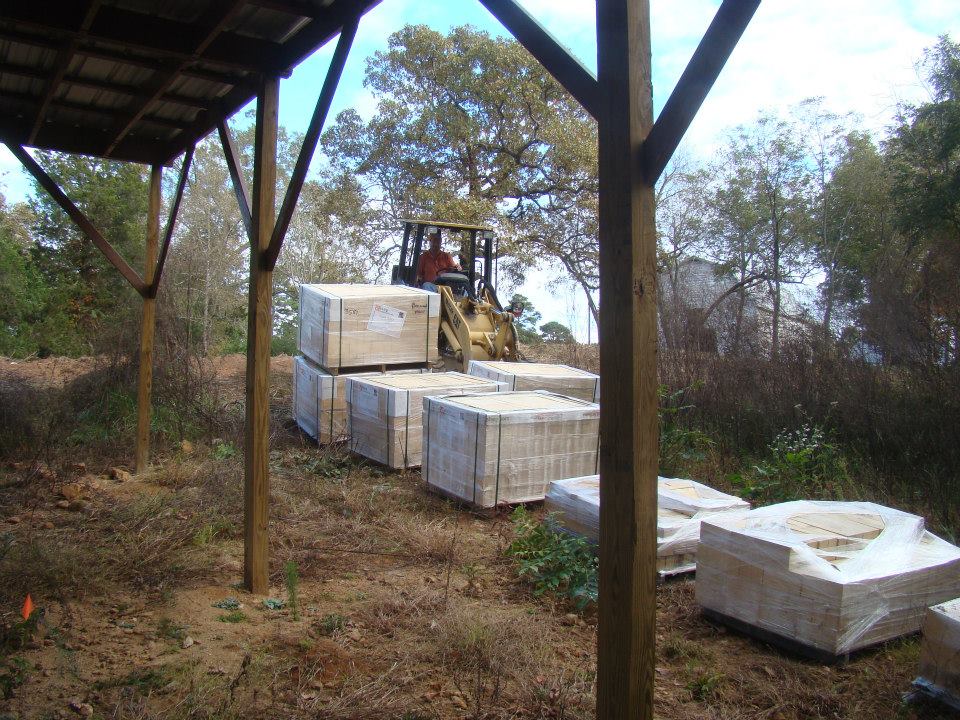
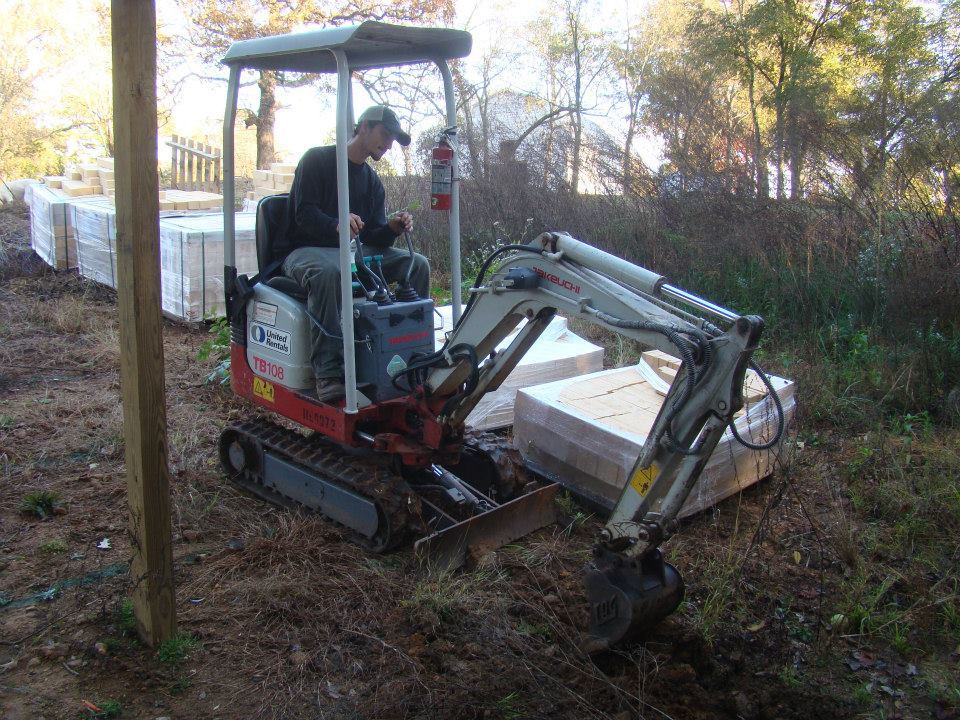
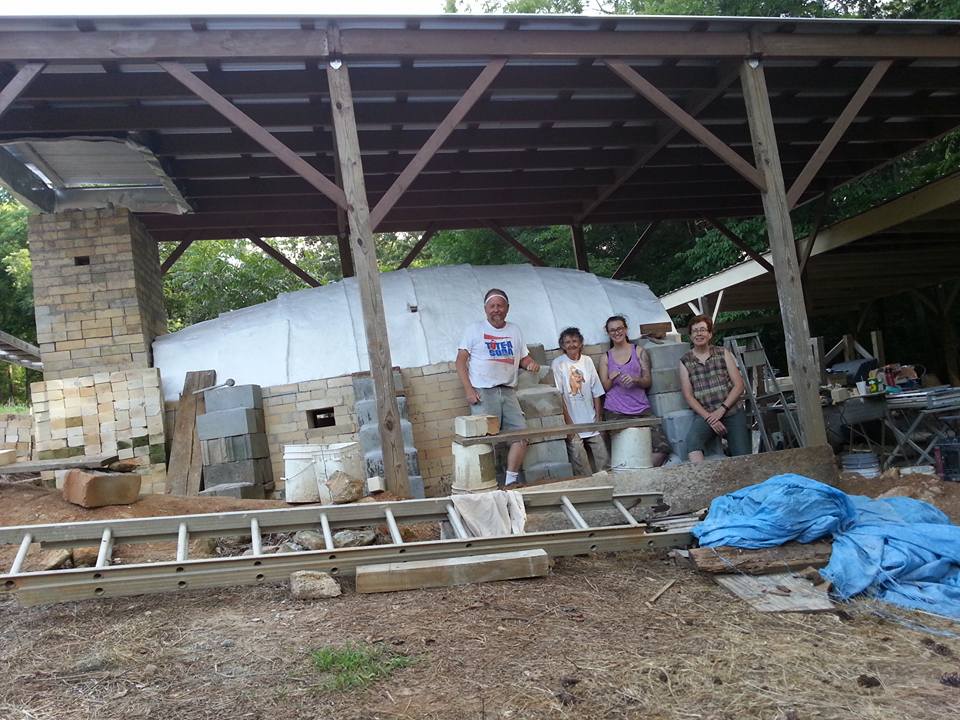
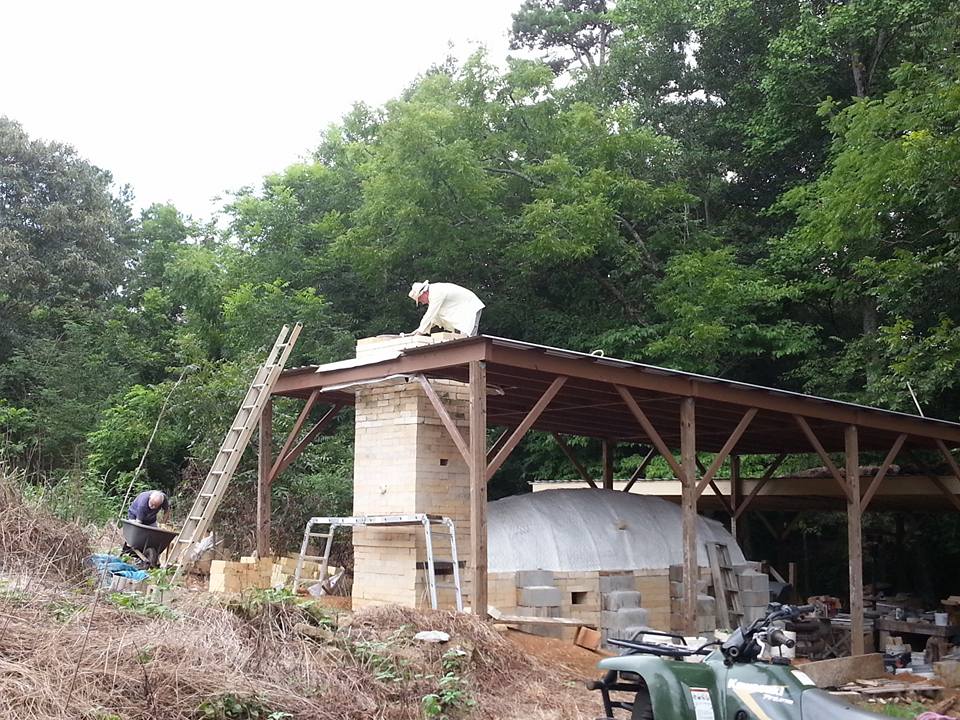
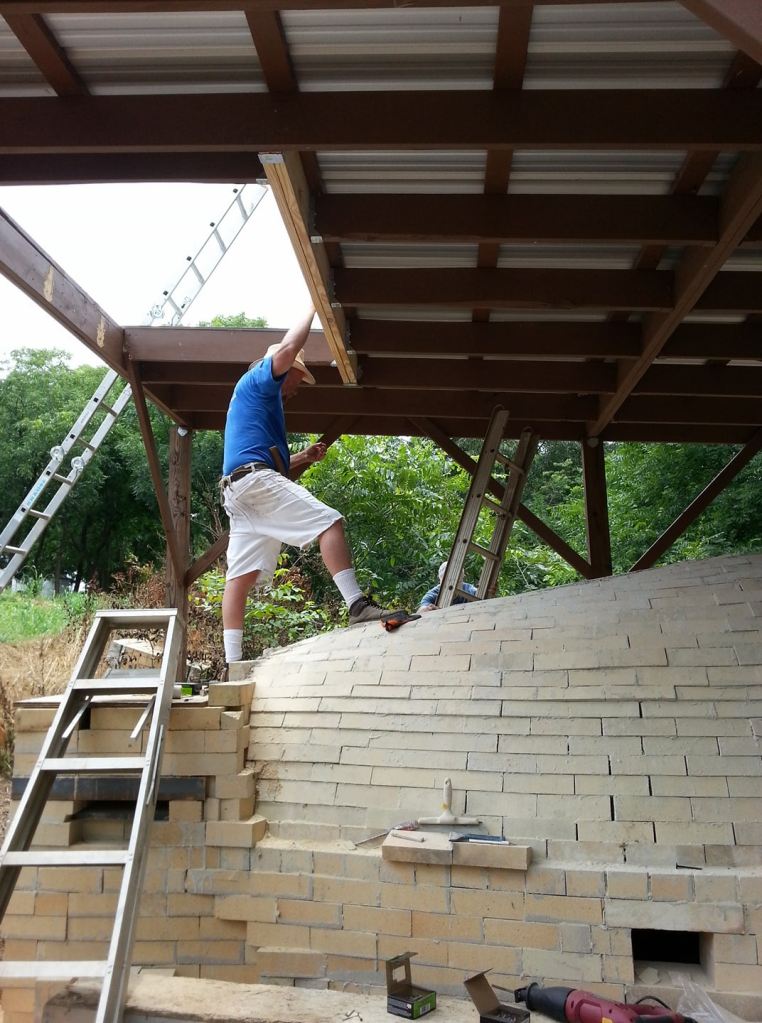
Construction of the kiln and kiln pad was a group effort. Friends from near and far lent a hand in everything from grading the landscape and framing the overhang to forming the arch and laying bricks.




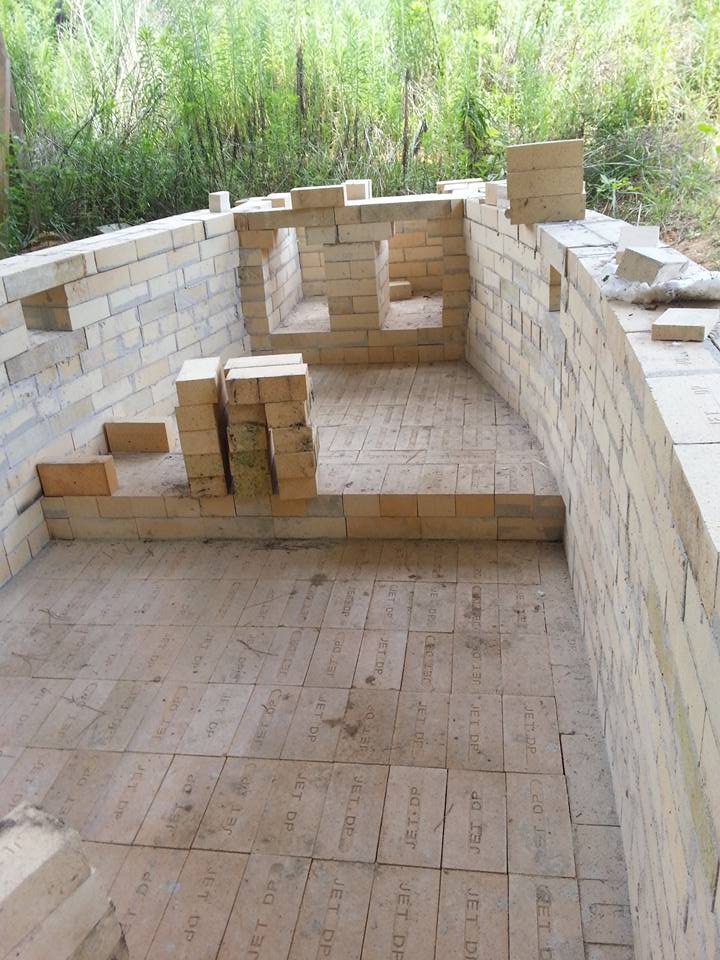

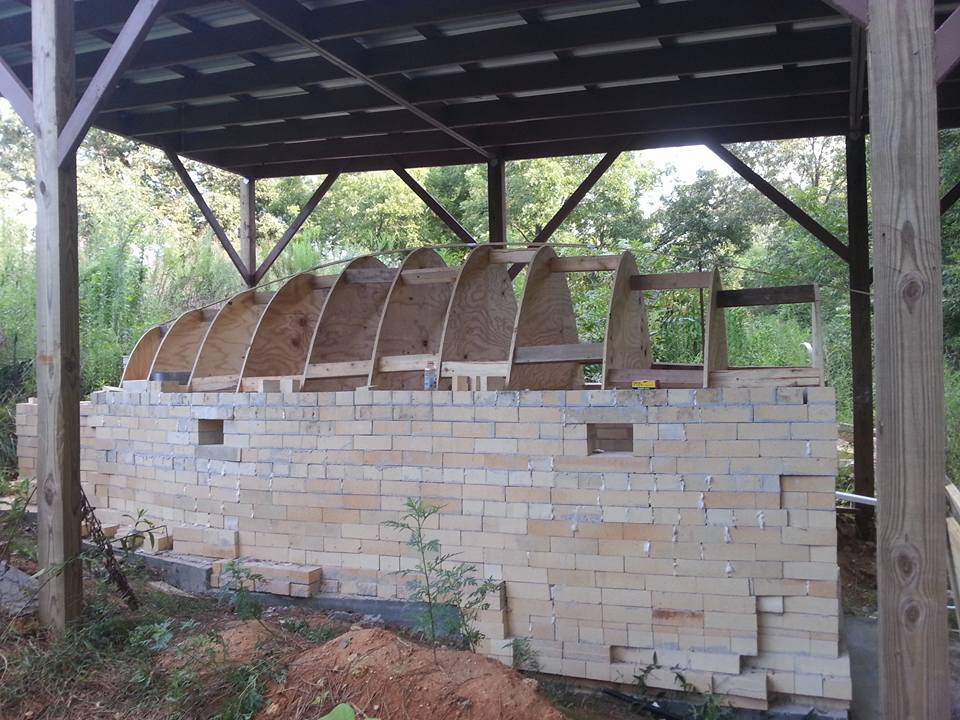
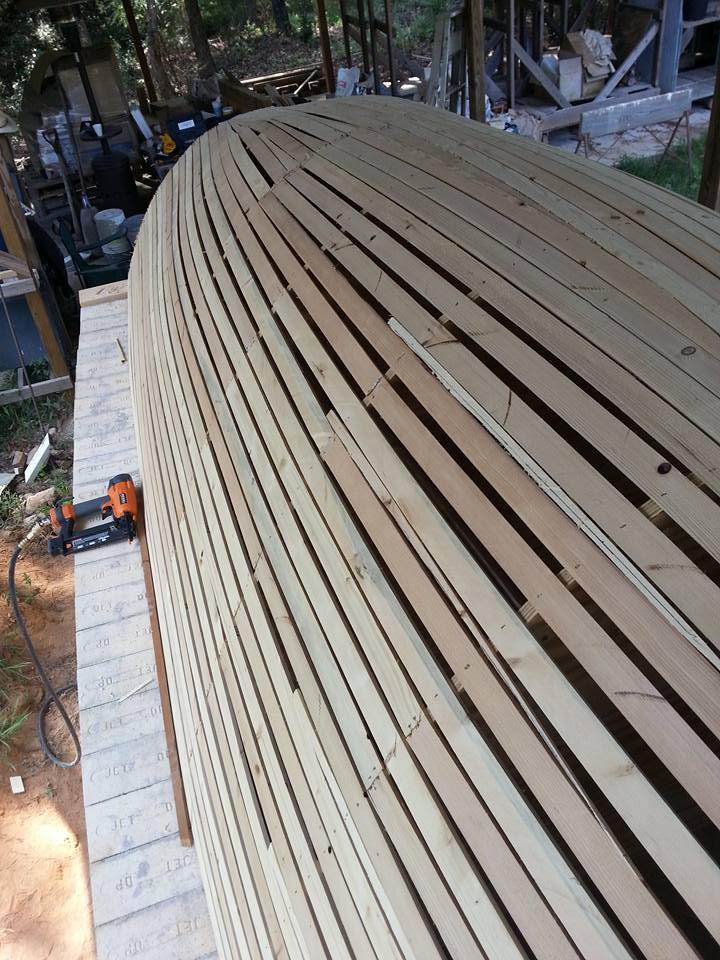
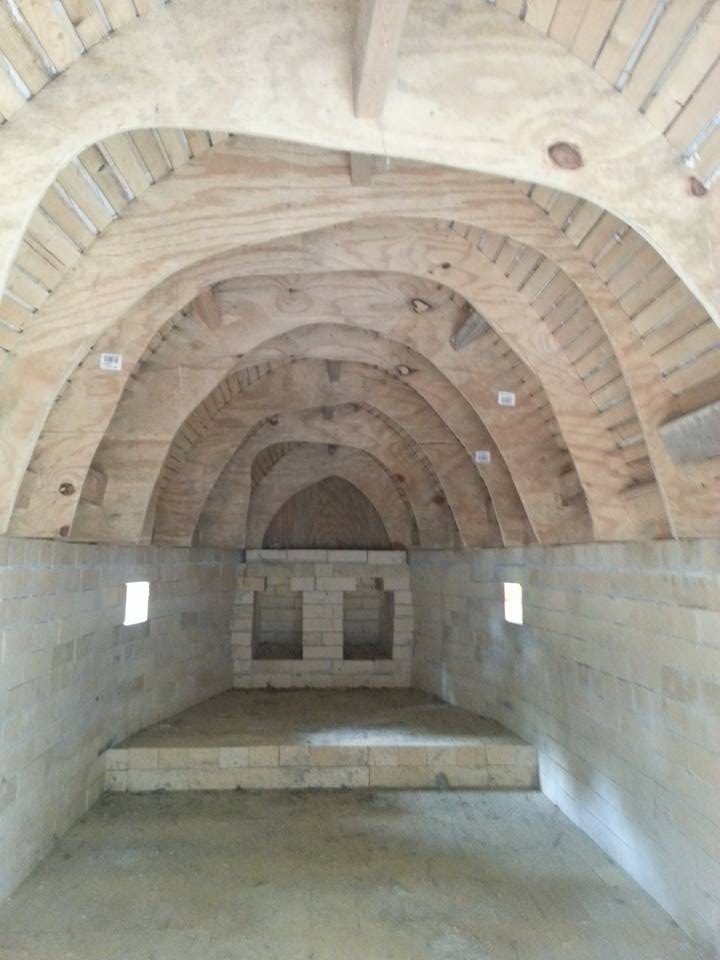

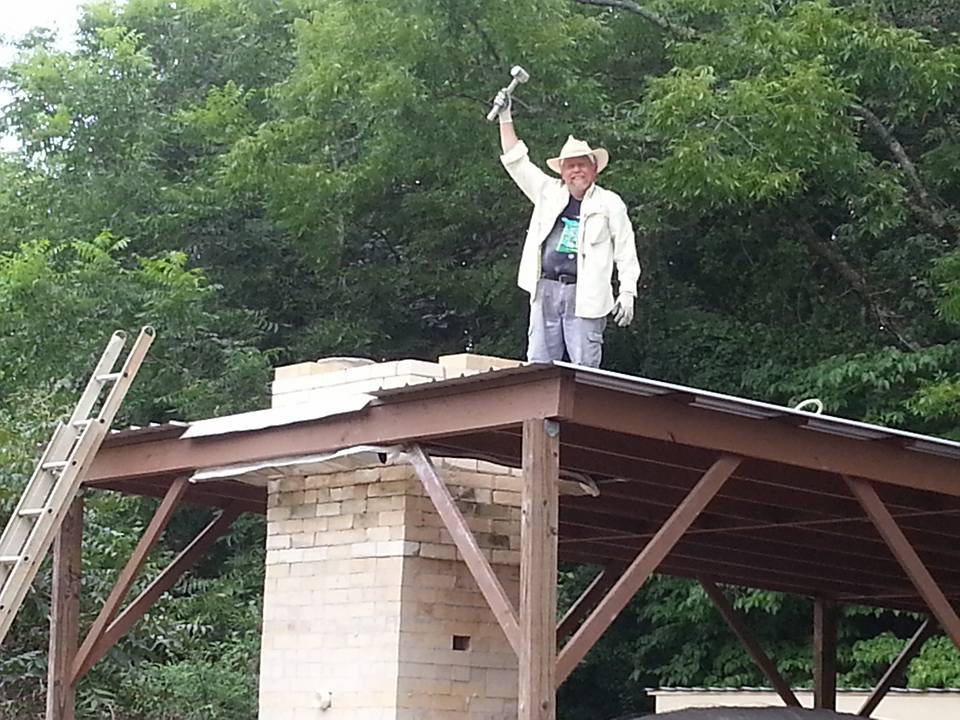
 Fire Song Anagama Kiln